
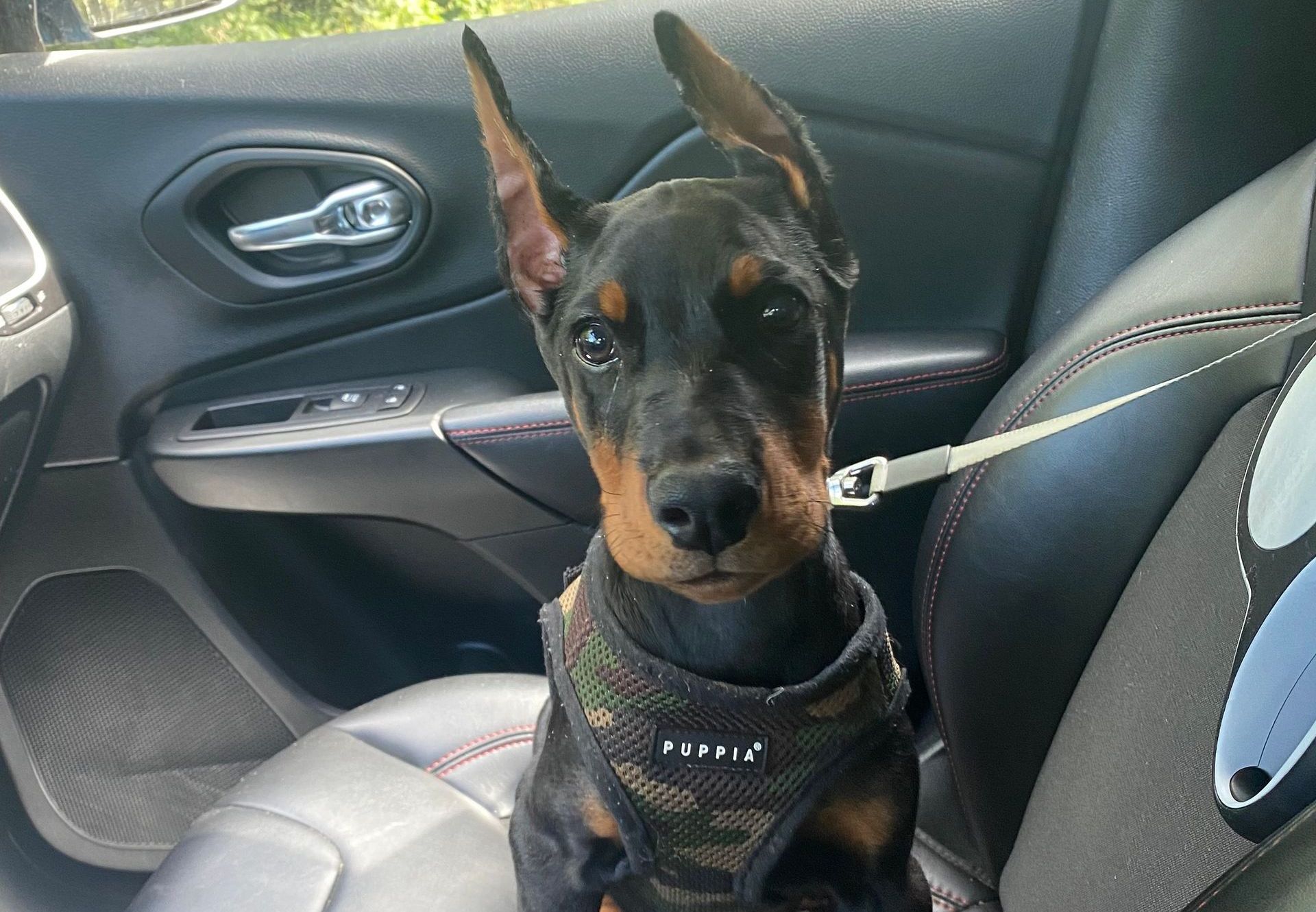

Puppy biting and destructive chewing are 2 of the biggest problems when bringing a new puppy into your home. Biting and chewing are completely natural behaviors hardwired into every dogs DNA. In the same way human toddlers explore everything with their hands, puppies explore everything with their mouths. One of the biggest misunderstandings about puppy biting is people think it is aggressive behavior, when in reality they are communicating with us as if we were dogs.
When you think about it dog language is the only language they know when we first bring them home. Let's look into canine social behavior to learn more about why puppies bite and chew and what we can do about. Looking for help around Elgin for your Puppy? Dogs learn how to be dogs from about 3 weeks of age until 8 weeks of age, this is why it is never recommended to take a puppy from its litter any sooner than 8 weeks.
Puppies learn bite inhibition from their litter mates, when a puppy bites another puppy too hard, the puppy that got bit will yelp to communicate with the other puppy that play was too rough. When dogs play with each other they are taking turns of playing prey and predator. The one being chased is prey the chaser is the predator. Healthy play is when dogs take equal turns and one is not always prey and the other is not always predator.
Mother dogs and littermates correct puppies as soon as they really start interacting with each other during the socialization phase (4-12 weeks) the important thing to note is that a relationship between them has been established, in my opinion we must first establish a relationship with our puppies before we immediately resort to more forceful techniques.
Developing a relationship to me really means to start the training process, have some communication with your puppy, manage every aspect of their lives and provide for their needs. See my article on pack structure and leadership. The first technique I like to try is interrupting the biting by doing anything that is mildly startling to stop the biting, then redirecting the puppy to appropriate toys.
We don't want to be too startling at such a young age due to the fear imprint period, (from 8-11 weeks) something like whistling, hand clapping, kissy noises and even a high pitch yelp if you can consistently find the range will work. Creating a positive interrupter can also help here. A positive interrupter is when you condition a sound by pairing it with food, this gives the sound meaning, do the conditioning separately.
For example, make a kissy noise then give food and repeat until the dog associates the sound with food, after this association is made, do the kissy noise, when the dog stops the behavior, mark the lack of biting with a verbal yes and then redirect them to a toy. After the interruption it is important to redirect your dog to something appropriate to play with. I believe you have to be clear with your interrupter to signify to the dog that this behavior is incorrect, be clear and be consistent.
To go along with this technique I can't stress enough the importance of exercising your dogs body and mind. The more time you spend doing constructive things with your dog, the less energy they will have to bite you. If your puppy continues to bite, put them in a crate, playpen or even better step over a gate and remove yourself from the room. This will show your dog that you go away when they bite.
So for some owners and dogs this technique is ineffective, this is why it is important to have many tools in your tool box. The following are my secondary options to this issue: If your puppy is small enough you can give a verbal "no" when they bite and put your hands under their armpits, lift your dogs front paws off the ground and immobilize them by holding them away from you.
Once they are calm, put them down and calmly praise them, then redirect to a toy The muzzle grab technique; say "no" and place your non dominant hand on the dogs scruff, grab your dogs muzzle with your dominant hand firmly but not firm enough to cause pain. Your dog will try to wriggle away from you, it is important that you don't let go until your dog calms down, once your dog is calm massage their ears and scruff to relax them, then you can redirect them to a toy.
Some dogs respond really quickly to pressing on their tongue with your thumb, they just don't like the feeling of it. To make this more effective you can put something bitter or spicy on your thumb. Once they stop biting, calmly praise them then redirect them to a toy. Use a bonker, a bonker is a rolled up towel with rubber bands around each end. When your dog bites say "no" and bonk your dog with the towel. This does not hurt the dog and is effective at getting your point across.
Again calmly praise when they are not biting and then redirect them to a toy. Lastly, if all of these other techniques fail a correction with a prong collar is our last resort. When your dog is biting say "no" and follow through with a correction with the prong collar. After the correction, calmly praise them and then redirect them to a toy.
The most important thing is that we are fair to the dog and understand that puppy biting is almost never a form of aggression and is normally play related and the only way they know how to initially communicate with us is through dog language. It is our job to teach our dog how to adapt to our human lifestyle and communication. Destructive chewing goes hand in hand with puppyhood, again puppies explore their surroundings with their mouths. A key component to dealing with chewing is management.
I believe in using crates, playpens, gates, leashes and tethering. Put simply, when you cannot pay attention to your puppy they should be put away in a safe